Hot Water Extraction vs. Dry Carpet Cleaning: Which Method Is Right for Your Home?
There is a version of this comparison that sounds technical and complicated. Extraction coefficients. Encapsulation polymers. Pile recovery rates. Nobody searching this question wants any of that.
What you actually want to know is: which method is going to work on my carpet, in my home, with my kids and pets and the winter grime that gets tracked in from November through March. That is the question this article answers.
First: Dry Carpet Cleaning Is Not Actually Dry
Before anything else, it helps to clear this up because it causes genuine confusion.
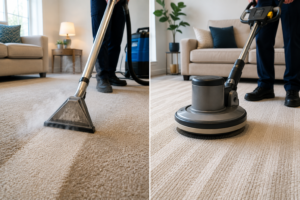
Dry carpet cleaning methods do use some moisture. The name refers to the fact that significantly less water is used compared to hot water extraction, and the drying time is much shorter. But the product being applied is not bone dry. What actually happens varies by method, but the most common version used in professional residential cleaning is encapsulation: a cleaning solution is worked into the carpet fibers, the solution crystallises around soil and debris, and the crystals are then vacuumed out. The carpet feels dry within about an hour to two hours.
Understanding this matters because the word “dry” leads a lot of homeowners to assume it is the gentler, safer option for all situations. Sometimes it is. Sometimes it is not.
What Hot Water Extraction Actually Does
Hot water extraction is commonly called steam cleaning, though it does not use steam. The correct term is hot water extraction, or HWE. Here is what the process involves: a cleaning solution is applied to the carpet, hot water under pressure is injected into the carpet fibers to loosen and break down soil, and then high-suction equipment extracts the water along with everything it has pulled from the pile, including the dirt, bacteria, pet dander and allergens that have settled deep into the carpet over months of daily use.
The critical thing about hot water extraction is where it reaches. It is the only method that penetrates all the way down to the pile layer, which is the lowest layer of the carpet structure. Encapsulation and dry compound methods work on the fibers they can reach from the top, which is where most surface soiling sits. What has settled into the base of the carpet over time stays there.
Hot water extraction removes approximately 97% of dirt and bacteria from carpet. Nothing else comes close to that figure, which is why it has become the industry standard for residential deep cleaning.
Drying time is the most common hesitation about this method. Depending on the carpet type, the thickness, the room’s ventilation and the quality of the equipment used, most residential carpets feel slightly damp for between two and eight hours after hot water extraction. Good professional equipment extracts a significant proportion of the moisture during the clean itself, keeping drying time toward the lower end of that range.
What the Carpet Manufacturers Say (And Why It Matters)
This is the part most homeowners are not aware of, and it is genuinely important if your carpet is relatively new.
Major carpet manufacturers including Shaw Industries, Mohawk Flooring, Stainmaster and Karastan specify hot water extraction as the required professional cleaning method for maintaining their carpet warranties. Dry cleaning methods, including dry compound and encapsulation, are generally not accepted as warranty-compliant cleaning methods by these manufacturers. Shaw Industries has stated directly that research indicates the hot water extraction system provides the best capability for cleaning.
What this means in practice: if your carpet develops premature wear or permanent staining within the warranty period and you have been cleaning it exclusively with a dry method, a warranty claim may not be successful.
If you are not sure whether this applies to your carpet, it is worth checking the documentation that came with it, or contacting the manufacturer directly before your next professional clean.
Where Dry Cleaning Genuinely Works Well
Encapsulation and dry compound methods are not ineffective. They are effective for specific situations, and understanding those situations helps you use each method at the right time.
Commercial carpets in high-traffic areas. Offices, retail spaces and commercial lobbies cannot shut down for a full day while carpets dry after hot water extraction. Encapsulation is widely used in commercial settings because it keeps carpeted areas presentable through regular use with minimal disruption. Many commercial buildings run monthly encapsulation cleaning for traffic areas and schedule hot water extraction once or twice per year for deep cleaning and warranty compliance.
Maintenance cleaning between deep cleans for residential homes. If you have hot water extraction done annually and you want to keep the carpets looking clean through a busy household year, encapsulation works well as a midyear maintenance option. It addresses surface soiling between deeper cleans without the drying time.
Situations where drying time is genuinely not possible. Moving back into a property the same day. Short notice cleaning before a significant event. A rental property handover with a tight schedule. In these situations, the faster dry time of encapsulation is a practical decision rather than a quality one.
The important limit to understand is this: encapsulation is a maintenance method, not a deep cleaning method. It is not appropriate as the only professional cleaning method for a heavily soiled residential carpet, for carpets with embedded pet dander or allergens, or for carpets that have not been deep-cleaned in more than a year.
What This Means for Toronto and GTA Homes Specifically
Toronto winters create specific carpet conditions that make this distinction particularly relevant.
From November through March, debris, road salt, sand and moisture get tracked in from outside with every entry into the home. In a family home in the GTA, this builds up through the carpet pile over five months of heavy indoor use. By the time April arrives, a residential carpet has accumulated a winter’s worth of embedded particulate matter, damp debris from boots and outdoor footwear, and often pet dander from animals spending more time indoors through the colder months.
For this situation, hot water extraction is the right method. The depth of cleaning it provides is the only appropriate response to a full Toronto winter’s worth of accumulation in carpet fibers. Surface cleaning with encapsulation at this point addresses what is visible but leaves the deeper layer of soil that has settled into the pile over the season.
For pet owners. Pet dander and pet oils settle deep into carpet fibers over time and attach to the pile layer. Encapsulation does not reach this material effectively. Hot water extraction, particularly with an enzyme-based pre-treatment for urine, is the only method that reliably addresses the bacterial content and odour source rather than just the surface staining.
For households with allergy or asthma sufferers. The allergens that affect respiratory health in an indoor environment, including pet dander, dust mite material and mold spores, live at the base of carpet fibers, not on the surface. Hot water extraction removes them. Surface methods significantly reduce but do not eliminate them.
For older homes with aged carpet. Many homes in Toronto’s established neighbourhoods, including North York, Etobicoke, Scarborough and East York, have older broadloom that has been in place for a decade or more. This carpet has accumulated years of embedded soil at the pile layer. Hot water extraction is the appropriate method for this material, and may also reveal whether the carpet has reached the point where cleaning is no longer restoring it to a satisfactory condition.
For rental properties and tenancy turnovers. A professional hot water extraction clean at tenancy turnover is the standard because it provides the documented, thorough clean that a new tenant starting fresh in a rental property deserves. Encapsulation for a rental turnover is a shortcut that tends to show within the first few months of the new tenancy.
A Note on Wool and Natural Fibre Carpets
Hot water extraction is not appropriate for all carpet types, and this is worth knowing.
Wool, sisal and other natural fibre carpets should not be cleaned with hot water extraction. The heat and moisture can cause shrinkage, colour bleeding and structural damage to natural fibres. Dry compound or low-moisture methods using wool-safe cleaning products are the correct approach for these materials. If you have a wool area rug or wool carpet and you are unsure which method applies, ask before any cleaning begins.
The Honest Answer
Hot water extraction is the right method for the deep cleaning most residential carpets in Toronto and the GTA need. It is what carpet manufacturers require for warranty compliance, what the Carpet and Rug Institute recommends for standard residential carpet, and what actually reaches the layer of the carpet where the buildup that affects air quality, allergens and long-term condition sits.
Dry cleaning methods, particularly encapsulation, are genuinely useful as a maintenance tool between deep cleans, for commercial settings where drying time is a constraint, or in specific situations where speed is more important than depth.
For most families across the GTA looking for a professional clean that actually addresses what their carpet has accumulated through a full year of use, hot water extraction is the answer, and a professional service that knows which pre-treatment each carpet type needs before extraction begins is what makes the difference between a carpet that looks clean and one that actually is.
My Property Care provides professional carpet and upholstery cleaning across Toronto and the GTA using hot water extraction for residential deep cleaning, with the appropriate pre-treatment matched to the carpet type and the specific condition of each job. If you want to understand what a professional clean costs for your specific home before you book, the carpet cleaning cost guide covers pricing by home type in honest, specific terms.
Call 289-301-0925 or fill in the quote form for a free, no-obligation estimate. 👇🏻
Published: July 2026 | My Property Care serves Toronto, Mississauga, Markham, Etobicoke, Vaughan, Thornhill, Richmond Hill, North York, Scarborough, Brampton and Oakville.