
Spring Lawn Care Checklist for GTA Homeowners: What to Do as Soon as the Snow Melts
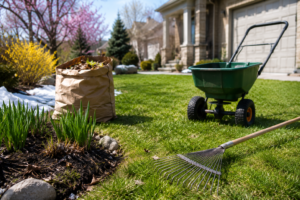
Here is the situation every GTA homeowner faces in March. The snow has pulled back enough to reveal the lawn, and what you are looking at does not look good. Yellow patches along the driveway edges. Brown matted areas where foot traffic cut across the grass. A general flatness and discolouration that makes the whole yard look tired.
Most of this is fixable. Some of it needs a different approach than what most homeowners try. And all of it responds to timing, which matters more than almost anything else in spring lawn care.
This checklist runs through exactly what to do, in what order, for a GTA lawn coming out of a Toronto winter.
Before You Touch Anything: Wait for the Ground to Firm
This is the step most people skip because it is not a task. It is patience.
The single most damaging thing you can do to a GTA lawn in early spring is walk on it, rake it, or run any equipment across it while the soil is still saturated. When the ground is soft and waterlogged from snowmelt, foot traffic and equipment weight compress the soil and damage the crowns of grass plants that are just beginning to recover from dormancy. The compaction this creates in soft soil is worse than anything winter itself produced.
Wait until the ground feels firm underfoot and no longer sinks noticeably when you walk across it. In the GTA this typically means sometime in late March or early April depending on the year, though the timing varies. Once the ground passes this test, you are ready to start.
Step 1: Walk the Lawn and Map the Damage
Before you do anything physical, spend five minutes walking the lawn and noting what you are actually dealing with. What you observe in this assessment determines what work is genuinely needed and what is not.
Look for four things specifically:
Road salt damage. Winter salt damage appears as brown, dead zones along driveways and sidewalks from road salt splash. The strips of grass running parallel to your driveway, front walkway and any paths that were regularly salted through the winter are where this damage concentrates. These areas often look completely dead in spring when the surrounding lawn is just beginning to green up. Note where these are because they need specific treatment, not just general lawn care.
Bare patches. Areas where grass has simply not survived the winter. Small scattered patches are common and repairable. Large areas of bare soil may indicate an underlying problem such as grub damage, drainage issues or shade conditions that need addressing before reseeding will hold.
Matted thatch. Grass that is matted flat from snow load and lack of airflow. This is often more alarming-looking than it is serious. Many areas that appear dead in early April are simply matted and recover quickly once they receive light, airflow and warmth.
Compaction patterns. Areas along frequently used paths, near gates, around play equipment or in any spot that received heavy foot traffic through winter. These will green up more slowly and may feel harder underfoot.
Step 2: Rake Lightly and Clear Winter Debris
Once the ground is firm, a light raking does two things. It clears the matted thatch that is blocking light and airflow from the crowns of grass plants, and it removes accumulated winter debris including leaves, twigs and anything else that settled on the lawn through the colder months.
The emphasis here is light. A heavy, aggressive rake in early spring with wet soil can pull up grass plants that are trying to recover and create more bare patches than it resolves. Use a leaf rake rather than a garden rake and work with the surface rather than digging into it.
This step is also when snow mould becomes visible if it is present. The matted brown mess typical of spring lawns is often what winter does, with freeze-thaw cycles beating up grass roots and clay soil packed harder than concrete. Snow mould shows up as circular patches of grey or pink matted grass and responds well to light raking that opens the area to airflow. In most cases, the underlying grass recovers on its own once conditions improve.
Step 3: Assess Your Soil Before You Do Anything Else
GTA lawns have a specific soil problem that most spring care misses. GTA lawns compact to two times their normal density after winter salt, and core aeration restores drainage almost immediately.
Before applying anything to the lawn, do a simple screwdriver test. Push a standard screwdriver into the soil in several spots across the lawn. If it meets significant resistance before reaching 6 inches, the soil is compacted and aeration will have more impact on the lawn’s recovery than fertiliser alone.
There is a nuance here worth knowing. Fall is the best window for core aeration on a GTA lawn, as aeration paired with overseeding in late August through September takes full advantage of the most effective germination window of the year. Spring aeration is appropriate for lawns with severe compaction that cannot wait until fall, but it is not a replacement for fall treatment. If you did not aerate last fall, spring is still worth doing for significantly compacted areas.
Step 4: Address Salt Damage Along Borders
Road salt damage along driveway and walkway edges needs different treatment from general lawn recovery.
The first step is to flush the area with water if you have not had significant rainfall. This dilutes the salt concentration remaining in the soil and begins to move it downward away from the root zone. If the area has already had substantial rain and snowmelt move through it, this is less of a concern.
For salt-damaged areas, these spots often need overseeding in fall rather than spring. This is the honest advice most articles skip: spring seeding in Ontario is second-best to fall seeding, and damaged strips along driveways and walkways are not going to fill in reliably from spring overseeding. Small repairs of a handful of bare spots are worth attempting in spring using a quality cool-season grass seed blend appropriate for the GTA, pressed firmly into the soil and kept consistently moist for three weeks. But if the salt damage is extensive along the entire perimeter of the driveway, the most effective approach is to note these areas now and schedule a proper fall overseeding treatment that will give the seed the best possible conditions to establish.
Step 5: First Cut Timing and Height
The first mow of the season in the GTA typically happens sometime in late April or early May, once the grass has actively resumed growth and reached approximately 3.5 inches in height.
The first mow should cut to around 3 to 3.5 inches, removing no more than one third of the blade length at once. Cutting too short in spring stresses the recovering root system and gives weeds a window to establish in the thinner turf.
Mower blade sharpness matters more in spring than any other season. A dull blade tears the grass rather than cutting it cleanly, leaving ragged brown tips that make the lawn look worse than it is and stress plants that are still in recovery mode. If the blade was not sharpened at the end of last season, sharpen it before the first cut.
Step 6: Fertilise Only After Active Growth Has Started
This is one of the most common spring lawn care mistakes in the GTA: fertilising too early before the grass is actively growing.
Applying nitrogen fertiliser to dormant or semi-dormant grass is largely wasted. The grass cannot take it up effectively, it leaches into the soil, and it can encourage top growth at the expense of the root development the lawn actually needs after winter.
Wait until the grass is actively growing and has greened up properly, which in the GTA typically means mid to late April. Apply a balanced slow-release fertiliser at the rate specified on the product label. Starter fertiliser, which has a higher phosphorus content, is appropriate for areas where you are overseeding to support root development in new seedlings.
Apply slow-release nitrogen at approximately 1 kg per 100 square metres once grass greens up. Toronto’s cool-season grasses like Kentucky bluegrass thrive with a 20% fescue mix for drought tolerance.
Avoid over-fertilising on clay-heavy GTA soils, which are common throughout Etobicoke, North York and Scarborough. Excess fertiliser on clay soil runs off rather than absorbing and can reach storm drainage.
Step 7: Weed Control at the Right Moment
Pre-emergent weed control, which prevents crabgrass and other annual weeds from germinating, needs to be applied before soil temperature reaches 10 degrees Celsius consistently. In the GTA this window typically falls in late April, though it varies by year.
The problem with spring weed control timing is that it closely overlaps with overseeding timing for bare patches. Pre-emergent products prevent all seeds from germinating, not just weed seeds. If you are planning to overseed bare areas in spring, you need to choose between the two rather than doing both simultaneously.
Perennial weeds such as dandelion and plantain that have overwintered and are now actively growing respond better to spot treatment in late spring once they are in full active growth than to early spring treatment.
Step 8: Plan Your Fall Work Now
The most useful thing you can do for your lawn in spring is decide what your fall program will be. This is the honest counterintuitive truth about GTA lawn care: spring work stabilises and maintains, but fall work is when the most significant improvements happen.
Aeration and overseeding in late August to September, when cool-season grasses like Kentucky bluegrass and fescue are in their optimal germination window, produces results that spring treatment simply cannot match. If your lawn has significant bare areas from salt damage, thin patches from grub activity or sections that have gradually declined over several seasons, scheduling a fall aeration and overseeding program in your calendar now means the work happens at the right time rather than being reactive.
When Professional Lawn Care Makes the Difference
For most GTA homeowners managing a standard residential lawn through a full May-to-October growing season, the accumulated tasks across spring, summer and fall represent a real and recurring time commitment. Fertilisation timing, aeration scheduling, overseeding at the right window, weed management, seasonal cleanup at both ends of the year.
My Property Care handles the full seasonal cycle of lawn care and landscaping across Toronto and the GTA for residential and rental properties, including spring recovery, regular maintenance through the growing season and fall preparation. For homeowners who want the lawn in good condition without managing each task individually, one point of contact for the full year is what actually makes that happen.
Call 289-301-0925 or fill in the quote form for a free, no-obligation estimate for your property.
Published: February 2026 | My Property Care serves Toronto, Mississauga, Markham, Etobicoke, Vaughan, Thornhill, Richmond Hill, North York, Scarborough, Brampton and Oakville.