
Electrical Services We Provide
Electrical Panel Upgrade
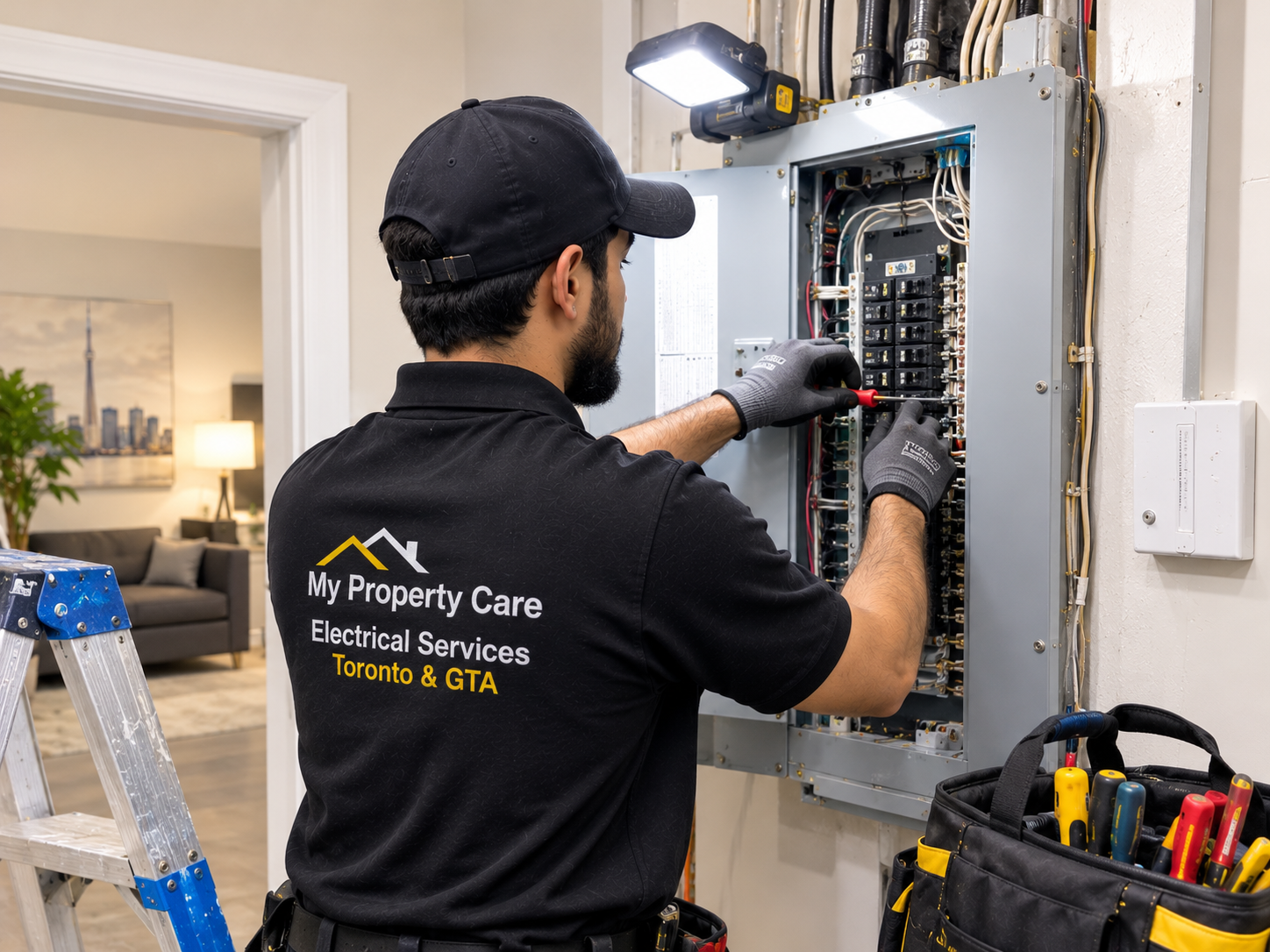
This is one of the most requested electrical services in the GTA right now, and for good reason. A large number of Toronto homes were built with 100-amp electrical panels. That capacity was adequate for 1970s or 1980s appliance loads, but it falls short for today’s combination of electric ranges, clothes dryers, air conditioners, and especially EV chargers and heat pumps.
A 100-amp to 200-amp panel upgrade in Ontario typically costs $2,000 to $4,500 installed, including the new panel, labour, ESA permit coordination, and the ESA Certificate of Acceptance. If the utility service entrance cable or meter base also needs upgrading, add $300 to $900 for that work plus a Toronto Hydro service coordination fee of approximately $120.
Signs your home may need a panel upgrade:
- Breakers trip repeatedly under normal household loads
- You cannot add a new 240V circuit for a dryer, EV charger, or range without overloading the panel
- Your panel is a Federal Pacific Stab-Lok model, which was common in GTA homes built between the 1960s and 1980s and has a documented history of breaker failures
- Your home has fuses instead of breakers
- You are planning a major renovation or adding an accessory dwelling unit
A 200A panel upgrade typically takes one day for the electrical work. Toronto Hydro coordination for the utility service adds 2 to 6 weeks of scheduling lead time, so planning ahead matters.
EV Charger Installation Toronto
This is the fastest-growing electrical service request we see in the GTA. As EV adoption continues to grow across the Toronto area, more homeowners are realizing that the Level 1 charging cable that came with the car (which adds roughly 3 to 5 kilometres of range per hour from a standard 120V outlet) is not practical for daily use.
A Level 2 EV charger operates on 240V and adds 30 to 60 kilometres of range per hour, making overnight charging realistic and convenient. It is the standard for any homeowner who drives an EV as their primary vehicle.
EV charger installation costs in Toronto (2026):
- Level 2 charger installation with existing 200A panel: $1,500 to $4,000 installed
- Full bundle with 200A panel upgrade included: $5,500 to $9,500 installed
Every EV charger installation in Ontario requires an ESA permit and inspection. Work must be done by a Licensed Electrical Contractor with a Master Electrician designation. We handle the permit, the installation, and the ESA inspection from one call.
A note on Toronto Hydro’s EV rate: Toronto Hydro offers an ultra-low overnight electricity rate of approximately 2.4 cents per kilowatt-hour between 11pm and 7am for enrolled customers. This is a meaningful cost advantage for EV owners who charge overnight at home compared to public charging stations.
For condos and townhomes, Ontario’s Bill 135 (the EV Right to Charge legislation) requires condo boards to reasonably consider EV charger installation requests from residents. Building-specific installation involves a load study and sub-metering but is now a right, not purely a privilege subject to the board’s preference.
Knob and Tube Wiring Assessment and Replacement
If your Toronto home was built before 1950, there is a real chance it still has some knob-and-tube wiring. This is a cloth-and-rubber-insulated system that was standard in homes across the city from roughly 1900 to the 1940s. The wiring system itself was code-compliant when it was installed. The problems arise from age, previous amateur modifications, and the fact that it was not designed for modern electrical loads.
Toronto neighbourhoods with the highest rates of remaining knob-and-tube wiring include The Annex, Cabbagetown, Riverdale, Trinity-Bellwoods, Roncesvalles, High Park, Leslieville, and The Junction. If your home is in any of these areas and has not been rewired, an electrical assessment is worth scheduling.
Why knob-and-tube wiring matters for Toronto homeowners:
The insulation degrades over decades, leaving conductors exposed in walls and ceilings. There is no ground wire in the system, which creates shock risk with modern three-prong appliances. Circuits are typically rated at 15 amps, which is not adequate for modern kitchen, laundry, or HVAC loads. The most common fire scenario involving knob-and-tube wiring is when blown-in attic insulation has been packed around the wires, trapping heat from even normal loads.
Insurance implications. Approximately 40% of Ontario insurers will not write coverage on a home with active knob-and-tube wiring. Many others add a 15 to 30% surcharge, or require a licensed electrician’s approval confirming the system is safe. At home resale, an inspector will flag active knob-and-tube wiring as a material defect, which can affect your sale price or require remediation before closing.
Replacement costs in the GTA:
- Electrical assessment: $200 to $400
- Partial rewiring (targeted areas): $3,000 to $8,000
- Full rewiring of a small home: $8,000 to $12,000
- Full rewiring of a medium home: $10,000 to $18,000
- Full rewiring of a large or complex home: $20,000 to $30,000+
The ESA permit and inspection for a full rewire adds approximately $200 to $500. Drywall patching and plastering for access holes typically adds another $500 to $2,000.
One timing note: if you are already planning a renovation that opens walls, that is the right time to rewire. The labour to open and patch walls is already in your renovation budget, so the incremental cost of running new wire through open walls is significantly lower.
Pot Light Installation
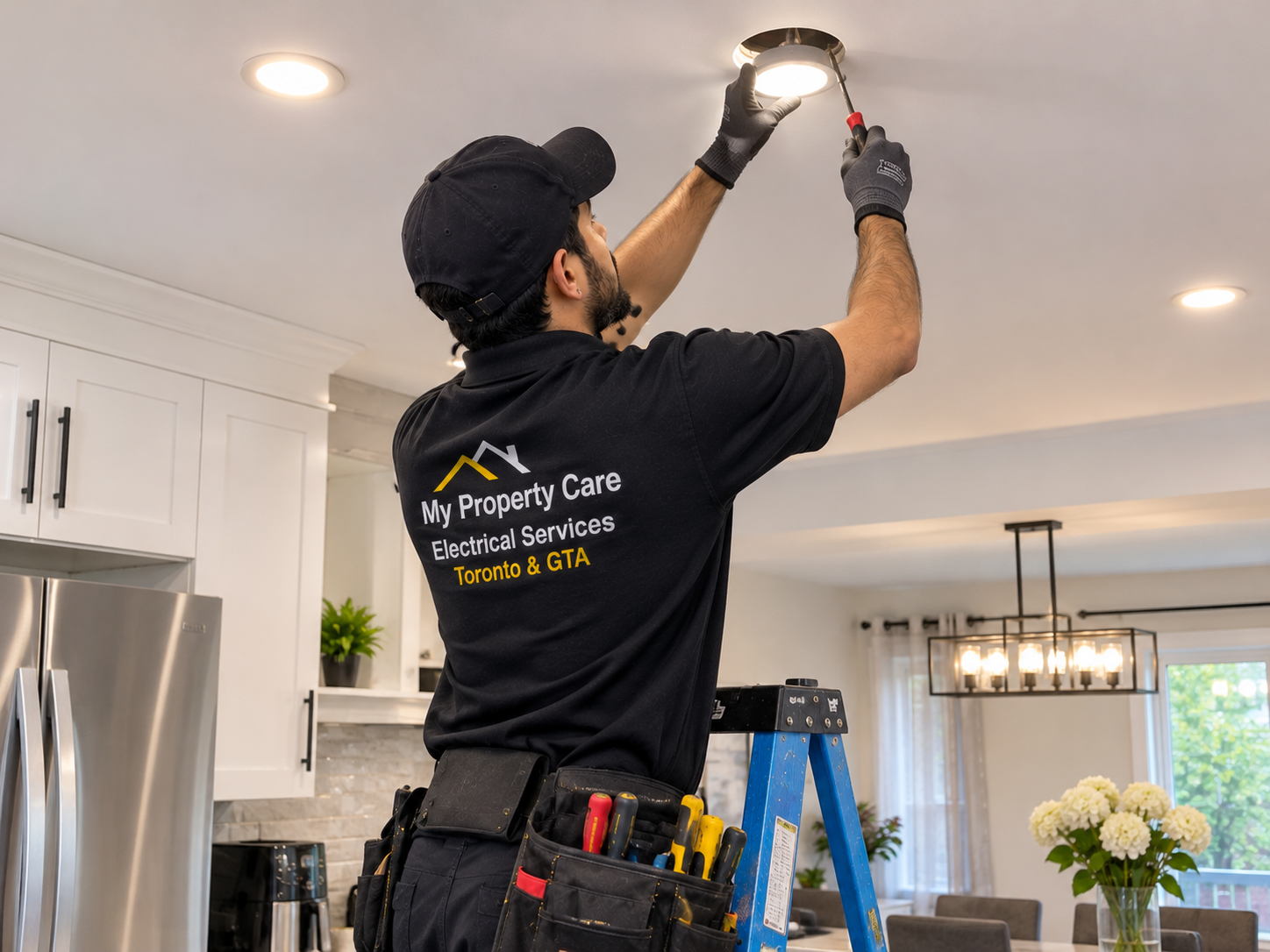
Pot lights (recessed LED downlights) are one of the most popular electrical upgrades in GTA homes, and for good reason. They produce clean, even light distribution, they eliminate the visual clutter of hanging fixtures in living rooms and kitchens, and LED pot lights use a fraction of the electricity of older incandescent fixture types.
Pot light installation in Toronto typically costs $150 to $300 per light, with the total for a living room or kitchen project of 10 to 20 lights usually running $1,500 to $5,000 or more depending on the ceiling type and whether new circuits are needed.
Outlet and Circuit Installation
Additional outlets, dedicated circuits for new appliances, outdoor GFCI outlets, USB outlet replacements, and arc-fault circuit interrupter (AFCI) upgrades on bedroom circuits all require a Licensed Electrical Contractor and an ESA permit in Ontario. We complete these jobs with the proper permits and inspection sign-off, so the work appears on the ESA record for the property.
New outlet installation typically costs $150 to $500 depending on location and whether a new circuit is required from the panel.
Lighting Installation and Upgrades
Interior and exterior lighting fixture replacement, ceiling fan installation, under-cabinet lighting, and outdoor security lighting all require licensed electrical work where new wiring or circuit connections are involved. Light fixture replacement that swaps one fixture for another at an existing outlet box is typically the most straightforward scope. New circuit runs for outdoor lighting or feature lighting add to the complexity and cost.
How This Connects to Your Home’s Other Systems
Electrical work rarely happens in isolation. If you are upgrading your panel to support an EV charger, that is also the right moment to assess whether your heating and cooling systems are ready for electrification. Many Toronto homeowners are pairing a panel upgrade with a heat pump installation as part of a broader move away from natural gas.
If you are considering a gas fireplace installation or other gas appliance, the electrical requirements for ignition, remote controls, and ventilation fans also need to be part of the conversation.