
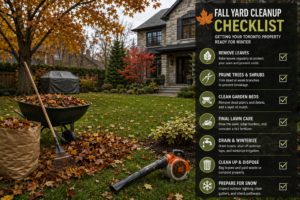
What you leave behind in November becomes what you fight in April. That is the most accurate way to describe the relationship between fall yard prep and spring recovery in the GTA, and it explains why the homeowners whose lawns green up earliest and cleanest in May are almost always the ones who put in consistent effort through October.
This is the complete fall yard cleanup checklist for Toronto and GTA homeowners, organized by category and timed to what actually happens in this specific climate rather than a generic October date. The timing matters here as much as the tasks.
Why September Is When You Act, Not When You Wait
Most GTA homeowners think of fall yard cleanup as an October or November task because that is when the leaves fall. That is the right time for the physical cleanup work. But the planning, the bookings and several of the highest-value lawn treatments need to happen in September, not after Thanksgiving.
The best lawn care crews in the GTA fill their October and early November calendars by mid-September. Calling after Thanksgiving means competing with everyone else who waited and finding very limited availability for the specific service windows that matter most. For a rough guide on booking: commit in September for late October service delivery.
This applies to snow removal contracts as well. Seasonal snow removal routes fill before mid-November and the homeowners who call in December after the first storm find limited options. The full guide on when to book snow removal in Toronto explains exactly how this plays out each year.
The checklist below is organized from what to do in September through to what happens in late October and early November, because the sequence matters as much as the tasks.
SEPTEMBER: The Planning and Treatment Window
Aerate and Overseed the Lawn
Late August through mid-September is the optimal window for core aeration and overseeding on GTA lawns. This is the single most important lawn improvement step of the year for most Toronto properties. Cool-season grasses including Kentucky bluegrass and fescue, which are standard across the GTA, germinate best at soil temperatures of 10 to 18 degrees Celsius. That window in fall runs from late August to late September. The new grass has six to eight weeks before frost to establish before winter dormancy.
GTA clay soils compact significantly through summer foot traffic and lawn equipment. Aeration relieves that compaction before the freeze-thaw cycle of a Toronto winter sets in and worsens it. Overseeding immediately after aeration takes advantage of the aeration holes as seed-to-soil contact points, producing germination rates 30 to 50 percent higher than overseeding into unprepared ground.
Do not leave this until October. The germination window narrows quickly as soil temperatures drop. The full lawn aeration and overseeding guide for GTA homeowners covers the timing and process in detail.
Apply Fall Fertilizer
Fall fertilization is arguably the most important fertilizer application of the year for cool-season grasses. A high-potassium fall fertilizer applied in early to mid-September encourages root development, helps the lawn store nutrients for early spring green-up, and builds the grass plant’s resilience for winter dormancy. A lawn that goes into winter well-fertilized recovers noticeably faster in spring than one that did not receive a fall application.
Apply once the summer heat has passed and the lawn is actively growing again, typically mid to late September across the GTA.
Book Your Fall Cleanup Slot
Contact your lawn care provider in September to secure your fall cleanup booking for late October. Mature GTA properties produce 30 to 80 bags of leaves between mid-October and mid-November. Crews servicing the heavily treed neighbourhoods of North York, Vaughan, Markham, Forest Hill and Rosedale fill their schedules early in the fall because the volume of work in these areas is substantial.
The City of Toronto operates curbside leaf collection across the city. Coordinating your cleanup timing with your street’s scheduled collection window reduces disposal logistics.
OCTOBER: The Core Cleanup Month
Leaf Removal from the Lawn
Leaving a thick layer of leaves on your lawn over winter is one of the most damaging things you can do. Matted leaves block sunlight and airflow from the grass beneath, create conditions for snow mould to establish and attract voles, which tunnel under the leaf mat through winter and cause visible damage across the lawn surface by spring.
The ideal cleanup window for leaf removal in the GTA is October 15 to November 10, after the bulk of leaves have fallen but before heavy snow arrives. For properties with multiple large deciduous trees, this often requires two passes: one in mid-October for the early-dropping leaves and a second in late October to early November for the final fall.
Rake, blow or use a mower with a collection bag to remove leaf material from all lawn areas. Leaving partial leaf coverage that will compress under snow is almost as damaging as full coverage because it still creates the matted, airless conditions that generate snow mould.
Clear Leaves and Debris from Driveways, Walkways and Interlock
Wet leaves on hard surfaces are a safety issue and a surface issue simultaneously. Wet leaves on interlock create slip hazards and leave tannin stains on the paving surface if left in contact long enough. Tannins are the organic compounds that give autumn leaves their colour, and they bond to concrete and natural stone surfaces when repeatedly wetted and dried.
Clear leaves, gravel and sand from all hardscape surfaces before they have had time to stain, particularly on interlock driveways and patio surfaces where tannin staining requires professional pressure washing to remove.
The Final Mowing
Give the lawn a final mow before the first frost settles in. The target mowing height for Toronto lawns going into winter is around 6 to 7 centimetres, which is slightly shorter than the summer maintenance height of 8 to 10 centimetres but not so short that the grass is stressed before dormancy. Grass that goes into winter too long mats under snow and creates snow mould conditions. Grass that is cut too short loses the protection of its leaf canopy during the transition into dormancy.
The final mow should happen after the last significant leaf drop but before the first frost. In the GTA this typically falls in late October.
Cut Back Perennials and Clear Garden Beds
Trim back spent perennials including hostas, daylilies, peonies, black-eyed Susans and ornamental grasses to a few inches above the soil level. Cutting these back in fall removes the dead material that would otherwise smother new growth in spring and reduces the habitat for overwintering insects and fungal spores.
Pull all spent annuals from garden beds. Remove the root ball and all above-ground material rather than leaving it to decompose in place, which can introduce disease to the bed soil.
Clear out vegetable gardens completely. Remove spent plants, stakes, cages and any fruit or vegetable material remaining on the ground. Leaving tomatoes, squash or root vegetables decomposing in the bed creates pest and disease conditions that carry into the following season.
Cut Back and Protect Vulnerable Shrubs
Tender perennial shrubs and broadleaf evergreens such as boxwoods and cedar hedges benefit from burlap protection before Toronto’s hard frosts arrive. Burlap wrapping reduces the desiccation damage caused by winter wind on evergreen foliage and prevents the structural damage from heavy snow accumulation on boxwood and other dense shrubs.
Ornamental grasses can be left standing through winter for seasonal interest and wildlife value, then cut back to a few inches in early spring before new growth begins. Alternatively, they can be cut back in late October if a tidier winter appearance is preferred.
Plant Spring Bulbs
Fall is the correct planting window for spring-flowering bulbs. Tulips, daffodils, crocuses and hyacinths need a cold dormancy period through winter to bloom successfully in spring. Plant before the ground freezes, typically before mid-November in the GTA, at the correct depth for each bulb type. This is one of the most rewarding fall tasks because the result is invisible until April, when it arrives exactly when the garden needs it most.
LATE OCTOBER TO EARLY NOVEMBER: The Closing Tasks
Clean the Gutters
Clean gutters after the bulk of leaves have fallen, typically late October to early November, not before. Cleaning them in September means a second full cleaning is needed once October leaf fall is complete. Blocked gutters overflow onto the lawn edge adjacent to the foundation, creating saturated waterlogged turf that struggles to drain in spring. In winter, overflowing gutters create ice dams on the roof edge and ice buildup on walkways below.
Clear all gutters, flush the downspouts and confirm water exits at the correct distance from the foundation edge. Downspouts that drain directly onto driveway edges or against the foundation accelerate both driveway deterioration and foundation moisture issues through winter.
Inspect and Address Hardscape Damage
Fall is the right time to assess driveway and walkway surfaces before another freeze-thaw winter makes existing cracks wider. Hairline cracks in concrete and asphalt that are filled in fall prevent saltwater from entering the crack through winter and expanding it. Leaving cracks unfilled is the most direct way to turn a minor surface repair into a major one by the following spring.
Check interlock joint sand and top up any joints where polymeric sand has degraded or been displaced. Open joints without polymeric sand allow weed growth to establish and allow water to penetrate directly to the base, which is the primary cause of interlock heaving across GTA properties.
Disconnect and Drain Garden Hoses and Irrigation
Drain garden hoses completely and store indoors. A garden hose with residual water left connected to an exterior tap in a Toronto winter can cause the tap to freeze and the pipe inside the wall to burst, producing expensive interior water damage with no visible warning until the spring thaw reveals it.
Shut off and drain irrigation systems following the manufacturer’s guidelines or a professional blowout service. The frost line in Toronto sits at approximately 1.2 metres, and any water remaining in irrigation lines above that depth is at risk of freeze damage.
Bin Cleaning Before Winter
This is the task almost every fall cleanup list omits. Garbage and recycling bins cleaned before winter are significantly easier to maintain through the colder months than bins that go into winter carrying the bacterial buildup from a full summer of heat exposure.
Professional garbage bin cleaning and sanitization removes the organic residue and bacterial biofilm that produce odour and attract pests before they remain sealed inside bins through a Toronto winter. Booking a final fall clean in October or November closes the summer maintenance cycle properly before bins are used mainly for bagged indoor waste through the colder months.
Book Duct Cleaning Before the Heating Season Starts
Fall is the natural timing for air duct cleaning in Toronto because the forced air heating system that runs continuously through a GTA winter starts in October. Having the ductwork cleaned before the heating season begins eliminates the accumulated summer debris from the system before it circulates through every room during the five to six months that windows are closed.
The One Mistake Most GTA Homeowners Make
Leaving any item on this list until November produces a compressed, stressed and often incomplete cleanup that takes twice as long in colder weather and delivers less benefit because the timing has moved past the optimal window for several of the most valuable treatments.
September is for decisions and bookings. October is for the work. November is for finishing touches after the last leaves have dropped.
My Property Care handles lawn care and yard cleanup services across Toronto and the GTA, including fall aeration and overseeding, lawn fertilization, leaf cleanup, garden bed clearing and all seasonal cleanup tasks covered in this checklist. For homeowners who want to understand what spring recovery looks like after a properly prepared fall, the spring lawn care checklist for GTA homeowners covers the other end of the seasonal calendar.
Call 289-301-0925 in September to book your fall cleanup slot before the October availability window closes.
Best published: First two weeks of September to capture early fall planning searches and drive September bookings for late October service delivery. | My Property Care serves Toronto, Mississauga, Markham, Etobicoke, Vaughan, Thornhill, Richmond Hill, North York, Scarborough, Brampton and Oakville.