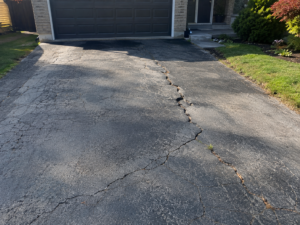
This is the question most GTA homeowners stand in their driveway asking every spring when the snow finally pulls back and reveals what a Toronto winter actually did to the surface. The cracks are wider than last year. There is a section near the garage that has definitely moved. The driveway looks ten years older than it did when it was installed.
The answer to repair or replace is not always obvious, and getting it wrong in either direction costs money. Repairing a driveway whose base has already failed means spending $1,000 to $3,000 on patching that fails within two seasons. Replacing a driveway that still has years of functional life means spending $4,000 to $18,000 unnecessarily.
This guide gives you the honest framework for making this decision on a GTA property, using the specific factors that matter: the type of damage, where it is concentrated, how old the driveway is, what the GTA’s specific freeze-thaw and road salt conditions have done to the underlying structure, and what the numbers actually look like for each option.
The Four Types of Driveway Damage and What Each One Means
The right starting point is understanding what type of damage you are looking at, because surface damage and base damage require completely different responses.
Type 1: Surface Cracks
Hairline cracks and narrow surface cracks under 6mm wide that run across the driveway face without following any obvious pattern are typically surface-level damage. They occur when the top layer of asphalt or concrete dries, cures and contracts over time, or when road salt degrades the surface chemistry of the material. Surface cracks that have not widened significantly and that do not sink or shift when you step on either side of them are repairable.
Cracks wider than 6mm, cracks that are actively widening year over year, or cracks that have a noticeable step or drop from one side to the other are telling you something different. Those cracks have a structural explanation and patching them from the top addresses the symptom while the underlying cause continues.
Type 2: Alligator or Spider-Web Cracking
This pattern of interconnected cracks covering a section of the driveway surface looks exactly like its name suggests: a cracked dried mud pattern, with multiple cracks intersecting across an area rather than single lines running across the surface. This pattern is not surface deterioration. It is base failure. The network of cracks means the underlying base material has shifted, compressed or lost stability, and the surface above it is responding to that movement by cracking across the full area of the problem zone.
Alligator cracking is one of the clearest indicators that repair is not the right investment. Filling or patching over alligator cracking without addressing the base creates a temporary cosmetic fix that will reproduce the same pattern within one to two seasons because the cause is still active below.
Type 3: Sinking, Heaving or Uneven Sections
A section of the driveway that has dropped relative to the surrounding surface, or risen above it, has a base problem. For concrete driveways, a section that has dropped may be addressable through mudjacking or polyurethane concrete lifting, which injects material beneath the slab to raise and stabilise it. Even major damage like a sinking section of concrete can be repaired by a professional using mudjacking or polyurethane concrete lifting and will average about half the cost of a new driveway.
For asphalt driveways, sinking or heaving typically indicates the granular base beneath the asphalt has shifted or failed. For Toronto and GTA properties specifically, the most common cause is the freeze-thaw cycle working on water that has infiltrated the base through surface cracks, combined with the natural heaving behaviour of the clay-heavy soils common throughout Etobicoke, North York, Scarborough and suburban GTA municipalities.
Heaving and settlement are base problems rather than surface problems, and the honest answer is often that the affected section needs removing and relevelling rather than surface treatment.
Type 4: Surface Spalling, Fading and General Wear
Spalling is the flaking or chipping of the top surface layer, most common on concrete driveways that have been exposed to road salt over multiple winters. The surface layer separates from the body of the concrete in thin fragments as the salt chemically degrades the cement paste binding the surface. Fading on asphalt is the oxidation of the bitumen binder from UV exposure and salt contact, turning a black driveway progressively grey.
Both of these are surface conditions. The driveway beneath the spalling or faded surface may be structurally sound. In these cases, resurfacing, sealing or patch repair addresses the issue at the appropriate level without requiring full replacement.
The Decision Framework: Surface vs. Base Damage
The single most important question in the repair-or-replace decision is whether the problem is in the surface material or in the base beneath it.
Surface damage means the underlying granular base and compacted sub-grade are intact and the damage is limited to the material above them. Surface damage is repairable because the repair has a stable platform to bond to.
Base damage means the material beneath the surface has shifted, softened, lost compaction or failed drainage. Surface repairs on base damage fail because they are bonding to material that is still moving beneath them. The new patch follows the same movement as the original surface and reproduces the same damage within months to seasons.
In Toronto, freeze-thaw cycles and de-icing salt often make surface damage seem minor while the concrete or asphalt base underneath has already begun to break down. This is the specific GTA diagnostic challenge: a driveway that looks like it has surface cracks may actually have a compromised base that has been working against it for several winters.
The field test for this is simple. Stand on both sides of a crack and watch whether either side shifts underfoot. Walk across a sinking section and feel whether it gives or bounces. Pour water on the low spot and watch whether it drains or pools. These physical tests give you more reliable information than appearance alone.
The 25 Percent Rule
The industry standard that competent driveway contractors use when advising between repair and replacement is the proportion of the total surface area that is damaged.
If more than 25 to 30 percent of the surface is in poor shape, the long-term cost of continuing to repair it exceeds the cost of replacement. You should budget for tree root removal, relevelling, or drainage fixes once damage covers more than a quarter of your driveway.
This threshold works because repair costs are not linear. Patching 10 percent of a driveway is straightforward and proportionally priced. Patching 30 percent of a driveway means the repair area is large enough that the labour and material cost approaches resurfacing cost, and resurfacing still does not address any base issues driving the widespread damage.
Apply this to your specific driveway by walking the full surface and estimating the combined area of visible damage as a proportion of the total. If the damaged areas together are under 25 percent and the damage is surface-level, repair is the appropriate direction. If the combined damaged area exceeds 25 to 30 percent, or if a smaller damaged area shows definite base failure signs like sinking or alligator cracking, replacement deserves serious consideration.
When Repair Is the Right Call
These are the specific conditions under which professional repair is the appropriate investment.
A driveway under 15 years old for asphalt, or under 10 years old for concrete in the GTA, that has developed isolated surface cracks or small potholes concentrated in one area is almost certainly a repair candidate. The base is likely still sound and the damage is from surface-level causes.
Isolated cracks under 6mm that have been stable in width from one spring to the next. A crack that has not grown is not actively failing. Filling and sealing it prevents water infiltration that would worsen it in future winters.
A single sunken section on an otherwise solid driveway where the surrounding surface is sound and the base failure is localised. This is the mudjacking scenario. If the damage is on the surface — cracks, flaking, spalling, stains — the driveway can be repaired or resurfaced for a fraction of replacement cost.
Surface spalling on a concrete driveway where the slab beneath the damaged layer is solid when tapped. Resurfacing bonds a new wearing surface over the existing concrete after repairs are made and costs roughly half of a full replacement.
Fading and oxidation on asphalt that is otherwise structurally sound. Sealcoating restores the bitumen binder layer and extends the functional surface life by several years.
When Replacement Is the Honest Answer
These conditions consistently indicate that repair investment is money spent on an outcome that will require replacement within two to three seasons anyway.
Alligator cracking across any significant section. The base is failing. Any surface repair will replicate the same pattern within two seasons.
A driveway over 20 years old for asphalt, or a concrete driveway showing through breakdown after multiple Toronto winters. An asphalt driveway can last 15 to 20 years. At the end of that service life, the cumulative degradation of the binder, the base saturation and the freeze-thaw damage make the remaining material a poor platform for any repair to bond to. Repairs at this stage address individual symptoms while the whole surface continues deteriorating around them.
Multiple previous repairs failing in the same locations. When the same spot gets patched two or three times and keeps failing, the underlying cause has not been addressed. This is the scenario where a good contractor should be willing to tell you when a repair is not the best long-term option. A replacement addresses the base correctly. Repeat patching does not.
Water pooling in areas that previously drained. New pooling where water used to run off means the surface level has changed, almost always from base compression or settlement. Drainage failure compounds over winters because pooled water infiltrates, freezes and expands, accelerating the base failure further.
Widespread salt damage on concrete. Road salt damage on concrete driveways across the GTA is cumulative and accelerating. The chemical degradation that road salt drives into concrete surfaces over multiple Toronto winters compounds each season, and a concrete driveway that has been subjected to heavy salt exposure for 15 or more years without regular sealing may have base-level concrete deterioration that surface repair cannot reach. The full explanation of how road salt destroys GTA driveways covers this process in specific detail.
GTA-Specific Factors That Accelerate the Decision
Three Toronto and GTA conditions push driveways toward replacement faster than they would deteriorate in milder Canadian climates.
Freeze-thaw frequency. Toronto averages more than 30 freeze-thaw cycles per winter. Each cycle works on any water that has entered cracks or the base material. The cumulative damage of 30 annual cycles across 10 winters is considerably more aggressive than the same driveway would experience in a city with fewer temperature crossings. A driveway that might last 20 years in Calgary or Vancouver on the same installation quality may show base compromise in the GTA at 12 to 15 years.
Clay-heavy GTA soils. The clay-predominant soils across Etobicoke, Scarborough, North York, Mississauga and suburban GTA municipalities heave more significantly under freeze-thaw cycling than sandy or mixed soils. Clay retains more moisture, expands more under freezing and creates more ground movement beneath the driveway base. Driveways installed over GTA clay without adequate base depth and granular sub-base preparation fail faster than the same installation over better-draining soil. If your driveway was installed at the budget end of the price range, the base may not have been prepared to the depth the GTA’s soil and climate requires.
Road salt exposure. Properties near main GTA roads, highways or arterials receive more road salt splash on driveway surfaces than properties on quiet residential streets. Salt accelerates concrete breakdown chemically and drives freeze-thaw damage by keeping surfaces wet longer. As detailed in the road salt and GTA driveway damage guide, this chemical degradation is progressive and compounds with every winter of exposure.
The Cost Comparison That Makes the Decision Clear
When repair and replacement costs are placed side by side for a standard GTA driveway, the decision point becomes clearer.
| Repair Type | Typical GTA Cost |
|---|---|
| Crack filling (per linear foot) | $1 to $3 |
| Pothole patching | $100 to $400 per pothole |
| Asphalt resurfacing per sq ft | $1 to $3 |
| Concrete resurfacing per sq ft | $3 to $7 |
| Mudjacking (sinking concrete) | 40 to 60% of replacement cost |
| Full asphalt replacement | $5 to $13 per sq ft |
| Full concrete replacement | $8 to $18 per sq ft |
| Full interlock replacement | $18 to $40 per sq ft |
The number that clarifies the decision for most GTA homeowners is the cost of repair as a percentage of replacement. When repair costs are approaching 40 to 50 percent of full replacement cost, replacement gives a new surface with a full service life rather than extended life on a degraded one. If sections have sunk or the slab is broken through, the base has failed and replacement is the honest answer.
For detailed current pricing across all three driveway material types, the full 2026 GTA driveway paving cost guide covers what replacement actually costs across different property sizes and material choices. For the comparison between asphalt and interlock and which makes more sense for a specific property, the asphalt vs. interlocking pavers guide covers the 20-year cost of ownership comparison that changes how most GTA homeowners think about the replacement decision.
Interlock Driveways: Different Rules
Interlock paving has a fundamentally different repair logic from asphalt and concrete.
Individual damaged or sunken pavers can be lifted, the base beneath adjusted and the stone relaid. The repair is essentially invisible because the replacement stone matches the surrounding surface. This is why interlock’s repair cost model is more forgiving than poured surfaces at the section level. A sinking interlock driveway section does not require the same base excavation and repour that a sinking concrete section does.
The full interlock replacement scenario only applies when the base beneath the pavers has failed comprehensively, when the polymeric joint sand is entirely depleted and weed growth has established throughout the joints, or when the paving stones themselves are damaged beyond individual replacement. For most GTA interlock driveways in this situation, the repair is targeted and individual rather than comprehensive, which is one of the practical advantages of interlock over poured surfaces for freeze-thaw climates.
Questions to Ask Any Driveway Contractor Before Committing
These separate contractors who give you the right answer from those who give you the answer that generates the larger job.
Is this a surface problem or a base problem? A contractor who inspects the driveway properly should be able to answer this clearly and explain what they found that tells them which it is.
If I repair this, what is the realistic lifespan of that repair? If the answer is not specific, the contractor may not have assessed the underlying condition properly.
What is your base preparation process for a replacement? The correct answer includes excavation depth in inches, granular base material specification and compaction method. A vague answer suggests base preparation is being underscoped.
What happens if we find base failure once the old surface is removed? Understanding what additional cost this triggers and what the contractor’s process is for communicating mid-project scope changes protects you from a budget surprise.
My Property Care provides driveway paving and interlock services across Toronto and the GTA with honest assessment of whether repair or replacement is appropriate for each property. Every quote starts with an accurate scope assessment rather than a direction chosen in advance.
Once the right driveway decision has been made and the surface is in good shape, spring maintenance including professional pressure washing to remove road salt residue and organic buildup protects the new or repaired surface from the next cycle of damage. The signs your driveway needs professional pressure washing covers what to look for each spring after a Toronto winter.
Call 289-301-0925 or fill in the quote form for a free, no-obligation assessment of your driveway and an honest recommendation on whether repair or replacement is the right direction for your specific property.
Published: September 2026 | My Property Care serves Toronto, Mississauga, Markham, Etobicoke, Vaughan, Thornhill, Richmond Hill, North York, Scarborough, Brampton and Oakville.